Console generations always hit a wall where creative ambition collides with the limits of physical silicon. As Rockstar Games prepares to unleash its next open-world titan, a cold technical reality is setting in for millions of console players: the standard PlayStation 5 and Xbox Series X will almost certainly run the game at a locked 30 frames per second.
The debate surrounding a potential **GTA 6 30 FPS** cap has taken over hardware forums, gaming subreddits, and tech analysis channels. While modern console marketing promised an era of flawless 4K/60 FPS gameplay, the scale of the upcoming Vice City sequel exposes the hardware compromises required to run a simulation of this magnitude. To understand why a 60 FPS performance mode is highly unlikely on base current-gen consoles, we must dissect the underlying system architecture, the rendering pipeline of the RAGE 9 engine, and the math governing console CPUs.

*The neon-drenched streets of Vice City demand unprecedented rendering power, forcing current-gen consoles to their absolute limits.*
---
## The Great CPU Bottleneck: Why GPUs Aren't the Problem
In console hardware discussions, players frequently point to GPU teraflops as the ultimate metric of gaming performance. If a console can render gorgeous games in 4K, why can't it run them at high frame rates? The answer lies in the fundamental division of labor between the Central Processing Unit (CPU) and the Graphics Processing Unit (GPU).
The GPU handles the visual presentation: rendering textures, drawing polygons, calculating lighting, and applying post-processing effects. If a game is GPU-bound, developers can easily boost performance by lowering the rendering resolution, using dynamic resolution scaling (DRS), or deploying upscaling technologies like AMD's FSR (FidelityFX Super Resolution).
The CPU, however, is the master orchestrator. It manages:
* **Physics simulations** (vehicle handling, ragdolls, water displacement, and debris).
* **Artificial Intelligence** (pathfinding, traffic patterns, pedestrian behavior, and police response systems).
* **Game logic** (tracking player inventory, mission triggers, and environmental states).
* **Draw call preparation** (telling the GPU what objects to draw and when).
When a game is CPU-bound, lowering the resolution does absolutely nothing to improve performance. If the CPU takes 33.3 milliseconds to calculate the physics and AI for a single frame, the game cannot run faster than 30 FPS, regardless of whether the GPU is rendering at 4K or 720p.
### The Zen 2 Architecture Problem
The PS5 and Xbox Series X both run on AMD's custom Zen 2 CPU architecture, which debuted in PC markets back in 2019. While this was a massive leap forward from the ancient, tablet-class Jaguar CPUs found in the PS4 and Xbox One, Zen 2 is now a bottleneck.
Both consoles feature an 8-core, 16-thread CPU running at clocks between 3.5 GHz and 3.8 GHz. In a highly dense, systemic open world like the one planned for the Leonida map, these processors will be choked by the sheer volume of real-time calculations.
To understand the geographical scale of this challenge, look at [What City Is GTA 6 Based On? Leonida State vs Real-World Miami and Florida Everglades](/news/what-city-is-gta-6-based-on-leonida-miami-everglades). Simulating a massive state containing metropolitan cities, swampy wilderness, and complex ecosystems requires an immense CPU budget that leaves little room for high frame rate rendering.
---
## RAGE 9 Engine and the Leonida Simulation
Rockstar Games has spent years upgrading its proprietary Rockstar Advanced Game Engine (RAGE). The version powering the next entry—often referred to by technical analysts as RAGE 9—introduces simulation systems that dwarf anything seen in *Red Dead Redemption 2*.
### Real-Time Crowd and Traffic Systems
The reveal trailer showcased packed beaches, bustling nightclub dancefloors, and multi-lane highways teeming with vehicles. Unlike older titles that used simple visual tricks to simulate distant crowds, Rockstar builds active, individual AI routines for its NPCs.
Every civilian on that Vice City beach has pathfinding AI, collision detection, reaction matrices for weather or crimes, and unique skeletal animations. Processing hundreds of these complex entities simultaneously eats up CPU cycles at an alarming rate.
```
[CPU Frame Cycle: 33.3ms Target for 30 FPS]
├── AI Pathfinding & Logic: ~12ms ──┤
├── Physics & Vehicle Dynamics: ~10ms ──┤
├── Game State & Scripting: ~6ms ──┤
└── Draw Call Preparation: ~5.3ms ──┤
```
If the CPU calculations alone exceed 16.6 milliseconds, a 60 FPS target becomes physically impossible on that hardware. Based on the density shown in the official GTA 6 gameplay teasers, the CPU simulation time will likely hover well above the 16.6ms threshold, locking the target to a stable **GTA 6 30 FPS** baseline.
### Advanced Physics and Vehicle Handling
Vehicle deformation, tire traction, aerodynamics, and water physics are all calculated in real-time. The RAGE engine uses a highly sophisticated physics solver that models suspension, weight transfer, and material density. When you crash a car at high speeds in Vice City, the CPU calculates the deformation of individual metal panels and the trajectory of shattered glass particles before sending that data to the GPU to be drawn.
> [PRO-GAMER HACK]: To prepare your eyes for a 30 FPS open-world experience, disable motion blur and set your TV’s response time to "Normal" rather than "Fast" if you experience screen-judder. If your display supports Variable Refresh Rate (VRR) and the developers implement a 40Hz/120Hz display mode, you can gain a 33% increase in temporal fluidity without overloading the console's CPU.
---
## Console Hardware Comparison: PS5 vs. Xbox Series X vs. Xbox Series S
To see how these hardware limitations manifest across the current-gen landscape, we can look at the raw specifications of the targeting consoles.
| Hardware Component | PlayStation 5 (Base) | Xbox Series X | Xbox Series S | PlayStation 5 Pro |
| :--- | :--- | :--- | :--- | :--- |
| **CPU Architecture** | Custom AMD Zen 2 (8 Cores / 16 Threads) | Custom AMD Zen 2 (8 Cores / 16 Threads) | Custom AMD Zen 2 (8 Cores / 16 Threads) | Custom AMD Zen 2 (8 Cores / 16 Threads with High CPU Frequency Mode) |
| **CPU Clock Speed** | Up to 3.5 GHz (variable) | 3.8 GHz (3.66 GHz with SMT) | 3.6 GHz (3.4 GHz with SMT) | Up to 3.85 GHz (10% boost mode) |
| **GPU Teraflops** | 10.28 TFLOPs (RDNA 2) | 12.16 TFLOPs (RDNA 2) | 4.0 TFLOPs (RDNA 2) | 16.7 TFLOPs (RDNA 3 / Custom) |
| **System Memory** | 16 GB GDDR6 (448 GB/s) | 16 GB GDDR6 (10GB @ 560 GB/s, 6GB @ 336 GB/s) | 10 GB GDDR6 (8GB @ 224 GB/s, 2GB @ 56 GB/s) | 16 GB GDDR6 (576 GB/s) + 2 GB DDR5 |
| **Upscaling Tech** | AMD FSR 2 / FSR 3 | AMD FSR 2 / FSR 3 | AMD FSR 2 / FSR 3 | PlayStation Spectral Super Resolution (PSSR) |
| **Estimated GTA 6 Target** | 1440p (Upscaled) at 30 FPS | 1440p-1800p (Upscaled) at 30 FPS | 720p-900p (Upscaled) at 30 FPS | 1440p-1800p (PSSR Upscaled to 4K) at 30 FPS (or dynamic 60 FPS) |
Analyzing this data reveals a harsh truth: the CPU performance across all three base consoles is remarkably similar. While the Xbox Series X has a slight clock speed advantage over the PS5, it is not large enough to bridge the gap between 30 FPS and 60 FPS.
The Xbox Series S presents an even greater bottleneck. With only 10 GB of total system memory and a severely cut-down GPU, Microsoft's budget console will require massive sacrifices in resolution, texture quality, and crowd density just to maintain a stable **GTA 6 30 FPS** performance profile.

*Complex vehicle physics and reflections will consume a massive portion of the consoles' rendering budget.*
---
## The Ray-Tracing and Global Illumination Factor
Another major factor pushing the game toward a 30 FPS cap is Rockstar's commitment to cutting-edge lighting techniques. As seen in the Vice City leaks and official promotional materials, the game relies heavily on real-time ray-traced global illumination (RTGI) and ray-traced reflections.
Traditional rasterized lighting uses static lightmaps and screen-space reflections (SSR). While cheap to render, SSR fails when objects are not actively visible on the player's screen. Ray tracing solves this by casting mathematical rays into the scene to calculate realistic bounces of light, shadows, and reflections off glass, water, and car paint.
Ray tracing is incredibly expensive for both the CPU and GPU. The CPU must construct and update a bounding volume hierarchy (BVH) structure every frame to track where physical objects are located in 3D space. The GPU's hardware RT cores then traverse this BVH structure to calculate ray intersections.
Because current-gen AMD GPUs feature relatively weak first-generation ray-tracing hardware, running high-quality RTGI at 60 frames per second is simply out of the question for the base PS5 and Xbox Series X.
> [ROOKIE MISTAKE TO AVOID]: Do not buy into rumors claiming that a "Day One Patch" or dynamic resolution scaling can easily unlock 60 FPS on base consoles. If a game is CPU-bound due to physics and AI, dropping the resolution to 720p will only make the game look blurry while still running at the same uneven, choppy frame rate.
---
## Will the PS5 Pro Save Us?
Sony's mid-generation refresh, the PlayStation 5 Pro, was designed specifically to address the graphical shortcomings of the base console. However, when it comes to breaking the **GTA 6 30 FPS** barrier, the PS5 Pro faces a major architectural hurdle.
While the PS5 Pro features a massive 67% increase in GPU compute units and introduces PlayStation Spectral Super Resolution (PSSR) for AI-driven upscaling, its CPU is virtually identical to the base PS5. The PS5 Pro's CPU features a "High CPU Frequency Mode" that boosts clock speeds by a mere 10% to 3.85 GHz.
An extra 10% of CPU clock speed is not enough to turn a heavily CPU-bound 30 FPS game into a stable 60 FPS experience. If the base PS5 is CPU-bottlenecked at 30 FPS, the PS5 Pro will likely use its massive GPU power to run the game at a native 4K resolution with enhanced ray-tracing effects, higher pedestrian density, and superior image clarity—but still locked at 30 frames per second.
For a deeper dive into how Sony's upgraded console handles this performance limit, check out our comprehensive analysis: [GTA 6 on PS5 Pro: Will Rockstar's Sequel Run at 60 FPS in Leonida?](/news/gta-6-on-ps5-pro-will-rockstars-sequel-run-at-60-fps-in-leonida-mt2noegq).
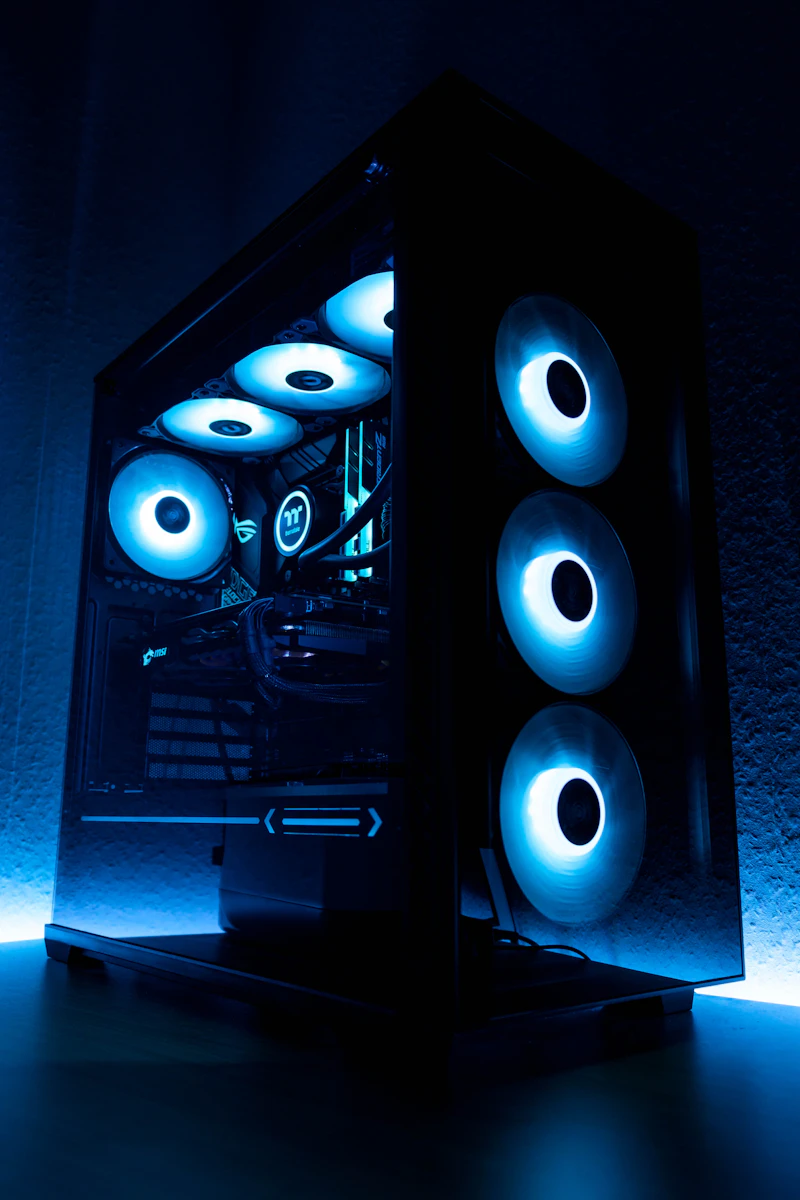
*The Zen 2 CPU architecture inside modern consoles serves as the primary technical bottleneck for next-gen performance.*
---
## The PC Version: The Only Path to Uncapped Frame Rates
Historically, Rockstar Games launches its titles on consoles first, leaving PC players to wait a year or more for a dedicated port. When the game eventually arrives on PC, it will finally break free of the console-imposed hardware shackles.
High-end PC hardware features modern CPU architectures (such as AMD's Zen 5 or Intel's Arrow Lake) that run at clock speeds exceeding 5.5 GHz. Combined with high-speed DDR5 memory and powerful graphics cards like the Nvidia RTX 40 and 50 series, PC will be the ultimate platform for running the game at 60+ FPS with maxed-out settings.
However, running a game of this scale will require top-tier specifications. To understand what kind of hardware you will need to run the game smoothly on PC, read our detailed hardware breakdown: [GTA 6 PC System Requirements: Will It Need 32 GB RAM & Can an RTX 4060 Run It? (30 FPS vs 60 FPS Breakdown)](/news/gta-6-pc-system-requirements-32gb-ram-rtx-4060-and-30fps-cap-guide).
---
## The Verdict: Managing Expectations for Launch Day
Rockstar Games has always prioritized cinematic presentation, technical boundaries, and visual fidelity over high frame rates. *Grand Theft Auto IV*, *Red Dead Redemption*, *Grand Theft Auto V*, and *Red Dead Redemption 2* all launched on consoles with a target of 30 frames per second.
By locking the frame rate to 30 FPS, Rockstar’s engineers gain a predictable, stable computational budget. This allows them to push the limits of character model detail, global illumination, crowd density, and physics simulation to levels never before seen in an interactive medium.
While a 60 FPS option is the gold standard for modern gaming, the sheer scope of the Leonida map means that console players must prepare themselves for a cinematic, rock-solid **GTA 6 30 FPS** experience.
---
## Frequently Asked Questions
### Will GTA 6 have a Performance Mode on PS5 and Xbox Series X?
While not officially confirmed by Rockstar Games, technical analysis of the hardware specifications suggests that a 60 FPS Performance Mode is highly unlikely on the base PS5 and Xbox Series X. The Zen 2 CPU inside these consoles is too weak to handle the game's complex AI, physics, and world simulation at 60 frames per second.
### Can the Xbox Series S run GTA 6 at 30 FPS?
Yes, Rockstar Games will optimize the game to run on the Xbox Series S, as Microsoft requires parity for all releases on its ecosystem. However, the Series S will likely see massive cuts in rendering resolution (potentially dropping to 720p dynamically), lower pedestrian and traffic density, and reduced texture quality to maintain a stable 30 FPS.
### Will the PS5 Pro run GTA 6 at 60 FPS?
It is highly unlikely. While the PS5 Pro features a much stronger GPU, its CPU is only 10% faster than the base console. Because the game is heavily CPU-bottlenecked due to simulation complexity, the PS5 Pro will likely run the game at a highly polished 30 FPS with superior image quality, higher resolutions, and enhanced ray-tracing effects rather than unlocking 60 FPS.
### Why does lowering the resolution not help achieve 60 FPS?
Lowering the resolution reduces the workload on the GPU, but does not change the workload on the CPU. The CPU must still calculate the pathfinding AI, vehicle physics, collision detection, and game logic for every frame. If the CPU cannot process these systems in under 16.6 milliseconds, the game cannot run at 60 FPS, no matter how low the resolution is set.
### How does Rockstar's RAGE engine handle 30 FPS compared to other games?
Rockstar Games is famous for outstanding frame pacing and motion blur implementation. Games like *Red Dead Redemption 2* on PS4 Pro felt incredibly smooth at 30 FPS because of consistent 33.3ms frame times and high-quality camera motion blur, which mimics the natural look of cinematic film. We expect similar optimization for the Leonida map on current-gen hardware.
---