### Quick Answer
> Rockstar Games delays GTA 6 on PC to prioritize console optimization for PS5 and Xbox Series X/S, eliminate hardware fragmentation bugs, and maximize retail revenue. Historically, this staggered release strategy allows Rockstar to polish the PC port while capitalizing on console double-dipping.
| Game Title | Console Release Date | PC Release Date | Length of PC Delay | Key Technical Hurdle at Launch |
| :--- | :--- | :--- | :--- | :--- |
| **Grand Theft Auto IV** | April 29, 2008 | December 2, 2008 | **217 Days** (7 Months) | CPU optimization, SecuROM DRM bottlenecks |
| **Grand Theft Auto V** | September 17, 2013 | April 14, 2015 | **574 Days** (19 Months) | Direct X 11/12 integration, 4K texture scaling |
| **Red Dead Redemption 2** | October 26, 2018 | November 5, 2019 | **375 Days** (12.5 Months) | Vulkan/DX12 API stability, launcher integration |
| **Grand Theft Auto VI** | Fall 2025 (Expected) | Late 2026 / 2027 (Projected) | **12 - 18 Months** (Estimated) | Shader compilation, RAGE 9 engine scaling, RAM optimization |
### How Rockstar's Staggered PC Release Pipeline Operates
1. **Console-First Optimization Focus:** Rockstar targets the fixed hardware of PlayStation 5 and Xbox Series X/S to establish a performance baseline, bypassing PC hardware configuration variables.
2. **RAGE Engine Refinement:** Engineers upgrade the proprietary Rockstar Advanced Game Engine (RAGE) specifically for PC architecture, rewriting rendering pipelines for dynamic graphics card configurations.
3. **Storefront and DRM Integration:** Developers embed proprietary anti-cheat systems, digital rights management (DRM), and Rockstar Games Launcher infrastructure to secure the PC build.
4. **Commercial Phase-Shifting:** Take-Two Interactive structures release dates to capitalize on multiple purchase cycles, encouraging enthusiasts to buy the console version at launch and the PC version later.
---
### The Architecture of Delay: Why PC Hardware Causes Friction
The primary technical bottleneck for any modern Rockstar Games release is the infinite fragmentation of the PC hardware market. Unlike the PlayStation 5 or Xbox Series X, which feature standardized, unified memory pools and fixed custom AMD Zen 2 CPUs, the PC landscape is a chaotic mix of components.
```
[Console Development] -> Single Hardware Spec (PS5/XSX) -> Direct API Calls -> High Optimization
[PC Development] -> Millions of CPU/GPU Combos -> API Translation Layers -> High Risk of Stutters
```
When building a game on the scale of Grand Theft Auto 6, which utilizes the updated RAGE 9 engine, asset streaming demands are unprecedented. The game must seamlessly stream the sprawling Leonida map, rendering hundreds of unique NPC behaviors, highly complex water physics in the Everglades, and dynamic traffic systems in downtown Vice City without a single loading screen.
On a console, developers write low-level code directly to the custom SSD controller. On PC, they must account for varying storage speeds—ranging from legacy 5400 RPM mechanical hard drives to ultra-fast PCIe Gen 5 NVMe SSDs. If the game engine cannot stream assets fast enough because a player is running the game on a standard SATA SSD or a system with limited system memory, the entire streaming pipeline collapses. This results in severe pop-in, asset dropouts, and catastrophic frame-rate drops.
Platform-specific system memory configurations present another engineering hurdle. To understand how system memory limits affect game stability, analyze our breakdown on [will GTA 6 require 32GB of RAM](/news/gta-6-32gb-ram-pc-requirements-bottlenecks-explained).
While consoles run on unified GDDR6 memory, a PC must split tasks between system RAM and dedicated GPU VRAM. This split introduces latency. If a PC lacks sufficient high-speed memory, the RAGE 9 engine must constantly swap assets in and out of the Windows page file, causing severe micro-stuttering. Rockstar's engine team requires months of extra development time to build robust memory allocation systems that prevent these bottlenecks across various PC setups.
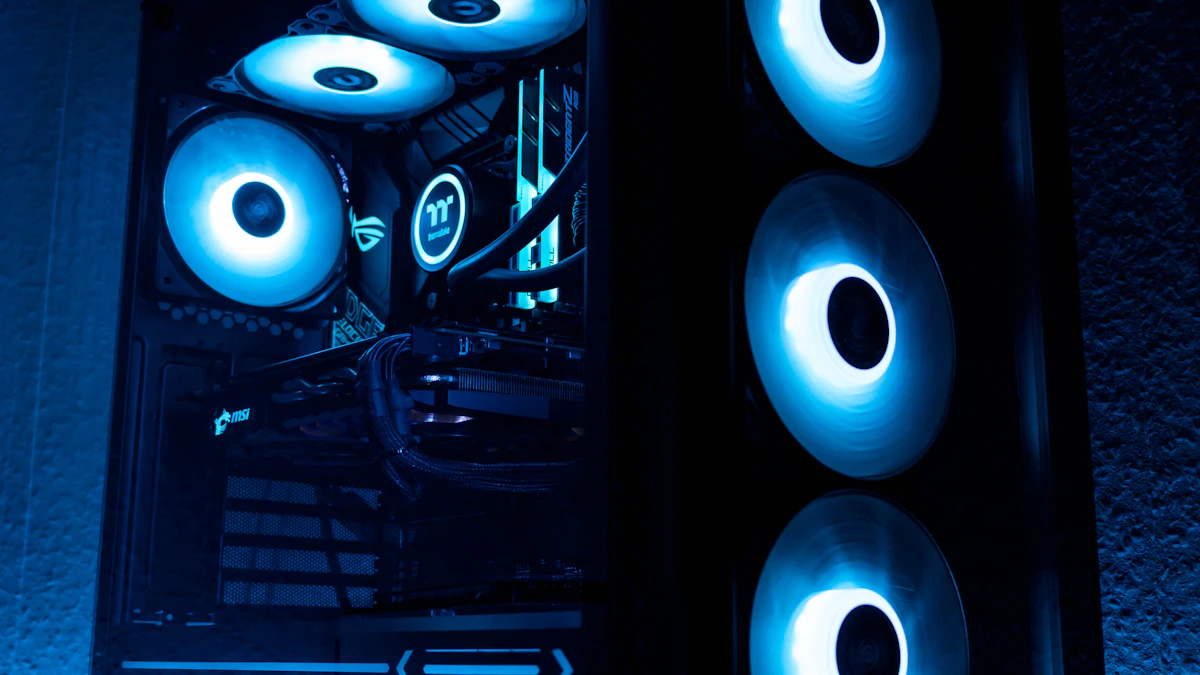
*High-end graphics cards require extensive driver optimization and custom shader compilation pipelines to run the RAGE 9 engine without micro-stuttering.*
---
### The "Double-Dipping" Economics of Take-Two Interactive
Beyond the technical challenges, the GTA 6 PC release delay is a highly effective commercial strategy. Take-Two Interactive, Rockstar's parent company, operates with a fiduciary duty to maximize return on investment for its shareholders. Historically, Rockstar's staggered release model has proven to be incredibly lucrative.
When a major Rockstar title launches, it becomes an immediate cultural phenomenon. Many PC-only gamers find it impossible to avoid spoilers, social media trends, and gameplay videos for over a year. Consequently, a massive percentage of the PC player base chooses to buy a console—such as a PS5 Pro or Xbox Series X—and purchase the game on day one.
When the polished, definitive PC version eventually launches 12 to 18 months later, featuring unlocked frame rates, native 4K resolutions, superior ray tracing, and custom modding support, those same players often purchase the game a second time. This strategy of securing multiple premium-priced purchases from the same customer is known in the industry as "double-dipping."
This staggered approach also helps protect initial sales from piracy. Standard PC releases are highly vulnerable to day-one cracking, which can impact early sales figures. By launching exclusively on physical and digital console storefronts like PlayStation Direct, Best Buy, and GameStop, Rockstar ensures that every copy sold in the critical first quarter is a legitimate, full-price sale.
Developing a game of this scale requires an enormous financial investment. To understand the scale of this project, read our detailed analysis of the game's budget: [did it really cost $2 billion to make GTA 6](/news/did-it-really-cost-2-billion-to-make-gta-6-rockstars-development-budget-and-gta--mt6ecdd6). This massive investment explains why Take-Two Interactive uses staggered release windows to minimize financial risk and maximize launch revenue.
```
[Day 1 Console Launch] --> $69.99 / £69.99 Standard Edition Sale (Zero Piracy Risk)
|
[12-18 Months Later] --> $69.99 / £69.99 PC Launch (Double-Dip Purchases from Enthusiasts)
|
[Multi-Year Lifecycle] --> Continuous PC GTA Online Microtransactions (High-Margin Revenue)
```
---
### Historical Precedent: Analyzing Rockstar’s Porting Timelines
Rockstar’s release history shows that the GTA 6 PC release delay is a standard part of their development cycle, not an unexpected setback. The studio has used this staggered release model for over two decades to ensure both quality and financial success.
#### The Grand Theft Auto IV Era (2008)
When *Grand Theft Auto IV* launched on Xbox 360 and PlayStation 3 in April 2008, PC players waited seven months for the port. When it arrived in December 2008, it was clear the port needed more development time. The game was notoriously unoptimized, brought even high-end Intel Core 2 Quad CPUs to their knees, and suffered from severe memory leaks.
The launch was further complicated by bloated DRM layers, requiring both SecuROM and Games for Windows Live to run. This rocky launch taught Rockstar a valuable lesson: porting complex, physics-heavy engines to PC requires deep optimization, not just a simple code conversion.
#### The Grand Theft Auto V Milestone (2013 - 2015)
The launch of *Grand Theft Auto V* represents the peak of Rockstar’s staggered release strategy. The game launched on PS3 and Xbox 360 in September 2013. Instead of porting that version directly to PC, Rockstar focused on developing the remastered edition for PS4 and Xbox One, which launched in November 2014.
The PC version finally arrived in April 2015—a full 19 months after the original console debut.
While the wait was long, the results were outstanding. The PC port was highly polished, featuring deep graphical settings, an advanced video editor, excellent scaling across mid-range hardware, and a smooth 60 frames-per-second experience. This success proved that taking extra time for the PC release results in a much better final product.

*The highly detailed neon environments of Vice City require precise GPU driver optimization to handle real-time ray-traced reflections without dropping frames.*
#### Red Dead Redemption 2 (2018 - 2019)
The launch of *Red Dead Redemption 2* followed a similar path. The Western epic launched on PS4 and Xbox One in October 2018, with the PC version arriving just over a year later in November 2019.
Even with a 12-month delay, the initial PC launch faced issues, particularly with the newly introduced Rockstar Games Launcher and early Vulkan/DirectX 12 API conflicts. However, within a few weeks of hotfixes, it became the definitive version of the game, showcasing incredible draw distances and unmatched lighting quality that consoles simply could not achieve.
---
### RAGE 9 Engine Capabilities and the PC Performance Gap
The performance gap between PC and consoles will be more apparent than ever with the debut of the RAGE 9 engine in GTA 6. Leaks and official trailers show that Rockstar is pushing real-time simulation further than any other developer in the industry.
* **Global Illumination & Ray Tracing:** GTA 6 features a fully real-time ray-traced global illumination system. On consoles, this system runs at a targeted 30 frames per second, using aggressive dynamic resolution scaling to maintain performance. To learn more about console performance targets, read our guide on [will GTA 6 run at 60 FPS on PS5 and Xbox Series X](/news/gta-6-60-fps-ps5-30-fps-cap-rumors-explained).
* **Pedestrian AI and Crowd Density:** The streets of Vice City and the beaches of Leonida are packed with dense crowds. Each NPC has unique pathfinding AI, dynamic reactions, and individual physics. Processing this level of crowd simulation requires significant CPU power, which can easily bottleneck mid-range PC processors.
* **Volumetric Water and Weather Systems:** The state of Leonida features advanced water physics, capturing everything from the shallow, muddy waters of the Everglades to the deep ocean waves of Vice City. The RAGE 9 engine simulates wind, water currents, and volumetric fog in real time, requiring high-end GPU compute pipelines to run smoothly.
> **[PRO-GAMER TACTICAL HACK]:** If you plan to play GTA 6 on PC at launch, do not compromise on your storage drive. The RAGE 9 engine uses DirectStorage APIs to stream assets directly to your GPU's VRAM. Running the game on a standard SATA SSD will cause major bottlenecking. To avoid asset pop-in and stuttering, make sure you install the game on a high-speed NVMe M.2 SSD with read speeds of at least 5,000 MB/s.
---
### Hardware Optimization: The RTX 4060 and System Memory Limits
For PC players looking to upgrade their hardware before the game's release, understanding system requirements is essential. The mid-range market, currently led by graphics cards like the Nvidia GeForce RTX 4060, will face a real test with the RAGE 9 engine.
```
[RTX 4060 Laptop/Desktop] ---> 8GB VRAM Limit ---> Must use DLSS 3 Frame Gen + Medium Textures
[High-End RTX 4080/4090] ---> 16GB+ VRAM ---> Supports Native 4K + High-Res Asset Streaming
```
An 8GB VRAM limit on cards like the RTX 4060 means players will need to make some graphical compromises. To see how this card is expected to handle the game, check out our performance analysis: [will GTA 6 run on an RTX 4060](/news/gta-6-rtx-4060-pc-specs-requirements-explained).
To run the game at 1080p or 1440p with stable frame rates, players will need to use upscaling technologies like DLSS or FSR, along with careful asset management. This highlights why Rockstar is taking extra time to optimize the PC version; they must ensure the game runs well on mid-range hardware while still delivering a high-end experience for top-tier systems.

*PC players will need to carefully balance graphics settings, resolution scaling, and memory limits to achieve stable frame rates on mid-range hardware.*
---
### The Scale of the Leonida Map and Enterable Buildings
The sheer scale of the game's setting, the state of Leonida, is another key factor behind the PC delay. The map is not just larger than GTA V's; it is much denser and more detailed.
For a closer look at how this map compares to its real-world inspiration, check out our guide on the [GTA 6 map vs. real-world Florida](/news/gta-6-map-vs-real-world-florida-locations-comparison).
The game features highly detailed recreations of Miami, the Florida Keys, and the Everglades. It also introduces a massive increase in the number of enterable buildings. From roadside motels to high-end clubs in Vice City, the game transitions smoothly between indoor and outdoor environments without loading screens.
Managing these transitions requires careful memory optimization. When a player enters a building, the engine must quickly load high-resolution interior assets while still keeping the vast outdoor world active in the background. On PC, where players expect uncapped frame rates and wide fields of view, managing this asset stream is incredibly difficult. Rockstar needs the extra development time to ensure these transitions are seamless across all PC hardware configurations.
> **[ROOKIE MISTAKE TO AVOID]:** Do not assume that having a powerful graphics card means you can skimp on your CPU or system RAM. GTA 6 is highly CPU-bound due to its advanced physics, crowd AI, and dynamic asset streaming. Pairing an RTX 4080 with an older 4-core CPU or just 16GB of slow DDR4 RAM will create a massive system bottleneck, leading to stuttering and frame drops even at lower resolutions.
---
### DRM, Anti-Cheat, and Platform Politics
The PC platform presents unique security challenges that do not exist on closed console ecosystems. For a high-profile release like GTA 6, securing the game's code and online mode is a top priority.
1. **Anti-Cheat Integration:** GTA Online remains a massive revenue source for Take-Two Interactive. However, the PC version of GTA Online has struggled with modders and cheaters for years. To protect the next iteration of GTA Online, Rockstar is building a robust, kernel-level anti-cheat system directly into the PC version from day one.
2. **Custom DRM Layers:** To prevent piracy at launch, Rockstar will use advanced Digital Rights Management (DRM) systems. This requires deep integration with the Rockstar Games Launcher, which must be thoroughly tested to prevent performance issues or login errors on launch day.
3. **Storefront Distribution:** Rockstar must navigate the business side of PC distribution, balancing Steam, the Epic Games Store, and their own proprietary launcher. Launching on their own platform allows them to keep 100% of the revenue, but they must ensure their infrastructure can handle the massive traffic of a launch day.
---
### Summary of Rockstar's PC Porting Timeline
Ultimately, the delay of GTA 6 on PC is a calculated decision that combines technical necessity with a proven commercial strategy. By focusing on consoles first, Rockstar can deliver a polished experience on fixed hardware while taking the extra time needed to optimize, secure, and refine the PC version. While the wait can be frustrating for PC players, history suggests that the final product will be well worth it.
---
### Frequently Asked Questions
#### Will GTA 6 be released on PC at the same time as consoles?
No, Rockstar Games has confirmed that Grand Theft Auto VI will launch in Fall 2025 for PlayStation 5 and Xbox Series X/S. The PC version has not been given a release date yet, but following Rockstar's historical release patterns, it is expected to arrive 12 to 18 months later, likely in late 2026 or 2027.
#### Why does Rockstar always release the PC version of their games late?
Rockstar uses a staggered release strategy for two main reasons: technical optimization and commercial strategy. Technically, it is much easier to optimize a highly complex game for fixed console hardware first, before tackling the infinite variations of PC configurations. Commercially, this strategy encourages enthusiast players to purchase the game twice—first on console at launch, and then again on PC for the definitive experience.
#### Can my current PC run GTA 6 when it eventually launches?
While official PC system requirements have not been released, GTA 6 will be a highly demanding game. You will likely need a modern multi-core processor, at least 16GB of high-speed RAM (with 32GB recommended for optimal performance), and a graphics card with at least 8GB of VRAM, such as the RTX 4060, to run the game at 1080p. Installing the game on a high-speed NVMe SSD will also be essential.
#### Will the PC version of GTA 6 be better than the console versions?
Yes, the PC version is expected to be the definitive edition of the game. It will likely feature unlocked frame rates, support for ultra-wide monitors, advanced ray-tracing options, customizable graphics settings, and support for upscaling technologies like DLSS and FSR. It will also eventually support the game's active modding community.
---